

The 3-3-3 Rule for Dog Adoption: Understanding Your New Dog's Adjustment
Adopt'Animaux Team
Adopt'Animaux Editorial Team
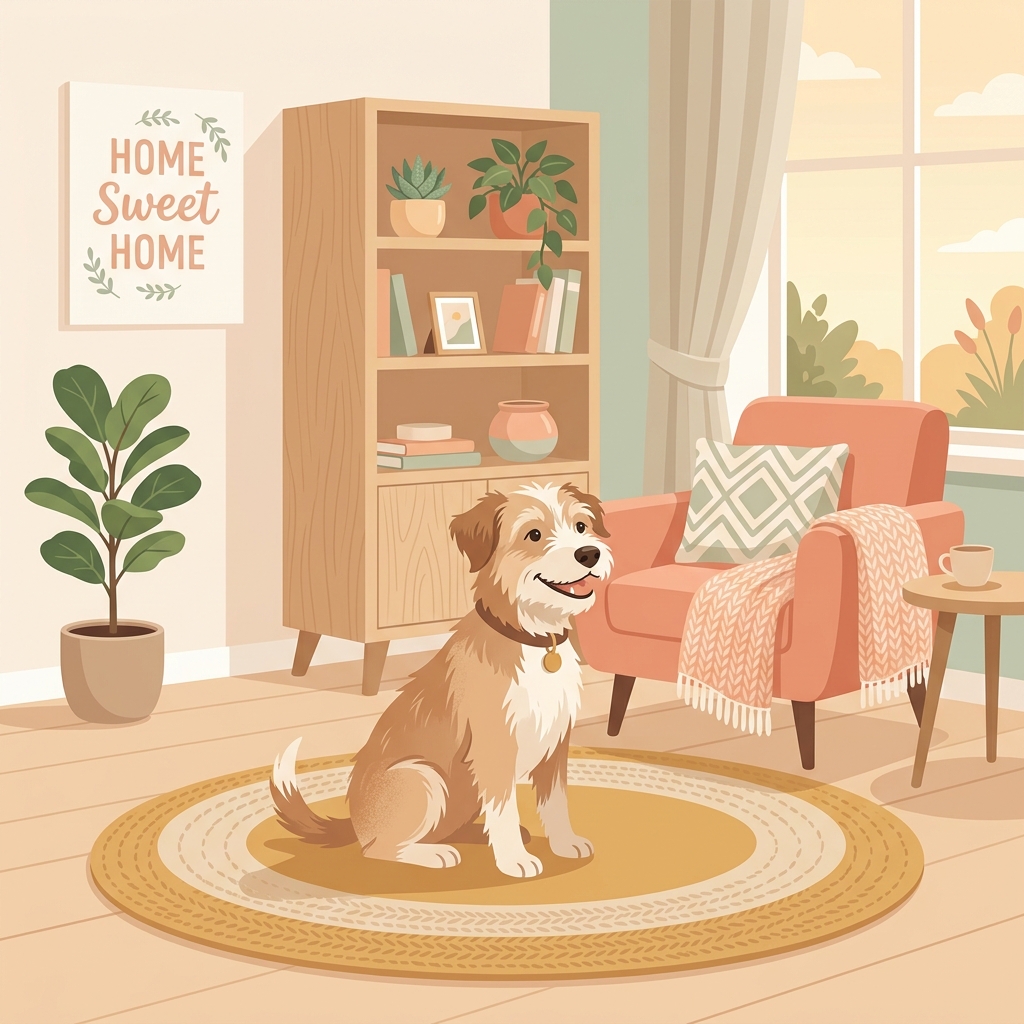
You’ve just adopted a dog. You’re excited, you’ve prepared everything — the bed, the bowls, the toys — and you’re expecting tail wags and immediate cuddles. But your new companion seems anxious, distant, or even paralyzed. Don’t panic: this is completely normal. And there’s a framework that helps make sense of it all — the 3-3-3 rule.
Originally developed by rescue professionals and animal behaviorists, this rule describes the three key phases of adjustment that virtually every adopted dog goes through. Knowing them lets you manage your expectations, support your dog appropriately, and build a solid foundation for a lifelong bond.
What Is the 3-3-3 Rule?
The 3-3-3 rule states that a newly adopted dog typically needs:
- 3 days to decompress from the stress of the shelter environment
- 3 weeks to start understanding its new routine
- 3 months to truly feel at home
These are averages. Some dogs decompress in 48 hours; others take weeks to truly open up. Senior dogs, traumatized dogs, or those who’ve had multiple placements may need longer. What matters is understanding the general arc — and being patient.
Phase 1: The First 3 Days — Decompression
What Your Dog Is Experiencing
Imagine being suddenly transplanted to a completely foreign place — new smells, new sounds, new people, new rules — after weeks or months in a stressful shelter environment. That’s what your dog is going through.
During the first 72 hours, many adopted dogs are in survival mode. They may:
- Refuse to eat or drink
- Stay hidden under the bed or in a corner
- Show no interest in toys or play
- Seem shut down or “checked out”
- Alternatively: be hyperactive, vocalizing, seemingly unable to settle
What you’re seeing isn’t the dog’s true personality. It’s a stress response.
What NOT to Do in the First 3 Days
❌ Don’t invite friends and family over to “meet the new dog.” This is one of the most common mistakes. Your dog needs quiet, not a party.
❌ Don’t force cuddles or interaction. Let the dog approach you on its own terms. Pushing contact creates distrust.
❌ Don’t take the dog to the dog park. Zero social interaction with unfamiliar dogs in the first few days.
❌ Don’t leave the dog unsupervised. A stressed dog in an unfamiliar house can hurt itself, escape, or destroy things not out of “bad behavior” but out of pure anxiety.
What TO Do in the First 3 Days
✅ Create a quiet, safe space. A crate or a closed-off room with a comfortable bed, their scent from the shelter blanket if possible, water, and food. This becomes their decompression zone.
✅ Keep noise minimal. No loud TV, no shouting, no chaotic household energy.
✅ Maintain consistency. Feed at the same times. Go out at the same times. Predictability is calming.
✅ Let them sniff everything at their own pace. Sniffing is how dogs process information and regulate stress. A long sniff of the garden is genuinely calming.
Phase 2: The First 3 Weeks — Testing and Learning
What Your Dog Is Experiencing
By the end of the first week, a visible change often occurs. Your dog starts to relax enough to begin exploring, playing, and interacting. This is when their real personality starts to emerge — and when the first behavioral challenges may appear.
The dog begins to understand that this is its home, but is still figuring out the rules. Like a new employee, they’re testing the norms: What gets rewarded? What gets a reaction? Where are the limits?
Common Behaviors in Weeks 2–3
- Resource guarding: growling over the food bowl, toys, “their” sofa. Address this calmly, without punishment.
- Leash pulling: first proper walks reveal leash manners (or lack thereof).
- Separation anxiety signals: whining, barking, destruction when left alone briefly.
- Selective hearing: the dog may know “sit” from the shelter but ignores it in the excitement of home.
- Jumping up: enthusiastic greetings that need redirection, not punishment.
What TO Do in Weeks 1–3
✅ Establish clear, consistent rules. Everyone in the household must agree on them before the dog arrives. Is the dog allowed on the sofa? In the bedroom? The answer must be consistent — mixed messages cause confusion and anxiety.
✅ Start basic training immediately. Sit, stay, down, leave it. Five-minute sessions, multiple times per day, using positive reinforcement (treats + praise). Early training builds trust, not just compliance.
✅ Introduce a crate if you haven’t already. A crate isn’t punishment — it’s a safe den. Many dogs sleep better and feel more secure with a crate as their “room”.
✅ Begin short departures. If you’re home all day during the first weeks, practice leaving for 15–30 minutes regularly so attachment doesn’t become co-dependency.
Phase 3: Months 1–3 — True Belonging
What Your Dog Is Experiencing
At the 3-month mark, something remarkable often happens: the dog fully settles into itself. It knows the routine. It knows the family. It knows the rules — even if it tests them occasionally (hello, adolescence in puppies and young dogs).
This is when:
- Meals are eaten calmly and eagerly
- Walks become predictable, enjoyable routines
- The dog greets you with genuine joy, not frantic anxiety
- Play becomes natural and relaxed
- Sleep is sound and deep
- The dog’s unique personality is fully visible
This is your dog’s true self. The one you’ll know for the next 10–15 years.
What TO Do in Months 1–3
✅ Consider group dog training classes. Not just for obedience — for socialization, confidence building, and the human-dog bond they reinforce.
✅ Begin carefully introducing new experiences. New environments, other dogs (vaccinated, calm temperament first), new people. Go at the dog’s pace — don’t push.
✅ Establish a solid vet relationship. A full health checkup if you haven’t done one. Establish baseline health data. Discuss spaying/neutering if not already done.
✅ If behavioral issues persist, consult a professional. A certified animal behaviorist (not a punitive trainer) can work wonders with dogs who’ve experienced trauma. Don’t wait 6 months before asking for help — the earlier, the better.
Summary Table: The 3-3-3 Rule at a Glance
| Phase | Timeline | Dog’s State | Your Focus |
|---|---|---|---|
| Decompression | Days 1–3 | Overwhelmed, shut down or frantic | Quiet, routine, zero pressure |
| Adjustment | Weeks 1–3 | Testing, exploring, personality emerging | Clear rules, positive training, consistency |
| Belonging | Month 3+ | Settled, truly home | Bond-building, socialization, joy |
FAQ: The 3-3-3 Rule
What if my dog seems “normal” from day one?
Some dogs with more stable temperaments or prior home experience adapt faster. This is great news. But still resist the temptation to overstimulate them in those first days. The decompression principle applies at whatever speed fits your individual dog.
My dog isn’t eating for 3 days — is that dangerous?
A healthy adult dog can safely skip 24–48 hours of food under stress. If it extends to 72+ hours or is accompanied by lethargy, vomiting, or diarrhea, contact your vet. Puppies and senior dogs have lower tolerance for food skipping and need to be monitored more closely.
We have other pets. When should we introduce them?
Not during the first 3 days. Ideally, wait until the new dog has shown some baseline calmness (usually end of week 1). Introductions should happen in neutral territory (the garden, not inside the house), with both animals on leash, keeping interactions brief and positive.
My dog was “perfect” in the shelter but is difficult at home. Why?
Shelter dogs often shut down — they suppress behaviors because the environment is so overwhelming. Home is where the real personality emerges. This isn’t deception — it’s the stress response. What you’re seeing at home at week 2 is closer to the dog’s true self than what you saw in the kennel.
Should I use a crate?
Crates, used correctly, are genuinely beneficial for most dogs. They provide a safe “den” and support toilet training. The key: the crate must always be a positive place — never used for punishment. Introduce it gradually: open the door, throw treats inside, let the dog explore before ever closing it.
Is the 3-3-3 rule the same for cats?
A similar adjustment arc applies to cats, though the timelines and behaviors differ. Cats generally need 1–2 weeks of quiet adjustment in a single room before gradually exploring the full home. The “3 months for true belonging” is similarly applicable.
What if after 3 months things still aren’t working?
First, consult a certified animal behaviorist — many challenges that seem insurmountable yield quickly to professional guidance. If after genuine effort (trainer, patience, time) the match is truly not working, contact your adoption organization. Most will help facilitate a responsible re-homing rather than have you keep an incompatible situation.
Conclusion: The Best Gift You Can Give Your New Dog Is Time
The 3-3-3 rule is ultimately about one thing: patience. In a world of instant gratification, adopting a dog is a reminder that the best things take time. The dog who hides under the bed on day 2 may be the one sleeping on your feet by month 3.
Give them the space to decompress. Give them consistent structure to learn from. And give them the time to discover that they’re finally, truly, home.
Ready to find your companion? Browse available dogs on Adopt’Animaux.